The Art of Marionette-Making: Crafting Puppets with Isabelle
Puppetry is an art that blends creativity, precision, and a deep understanding of materiality. Isabelle Dufour’s journey into marionette-making reflects all of these qualities. Her story began in Chicoutimi north of Quebec City, where she discovered her passion for puppetry at the age of 15. “I came across a book called The Art of the Puppet by Bill Baird and was fascinated by one of the puppet designs. It inspired me to try making my own puppet,” she recalls. That early experience would set the stage for her lifelong career.
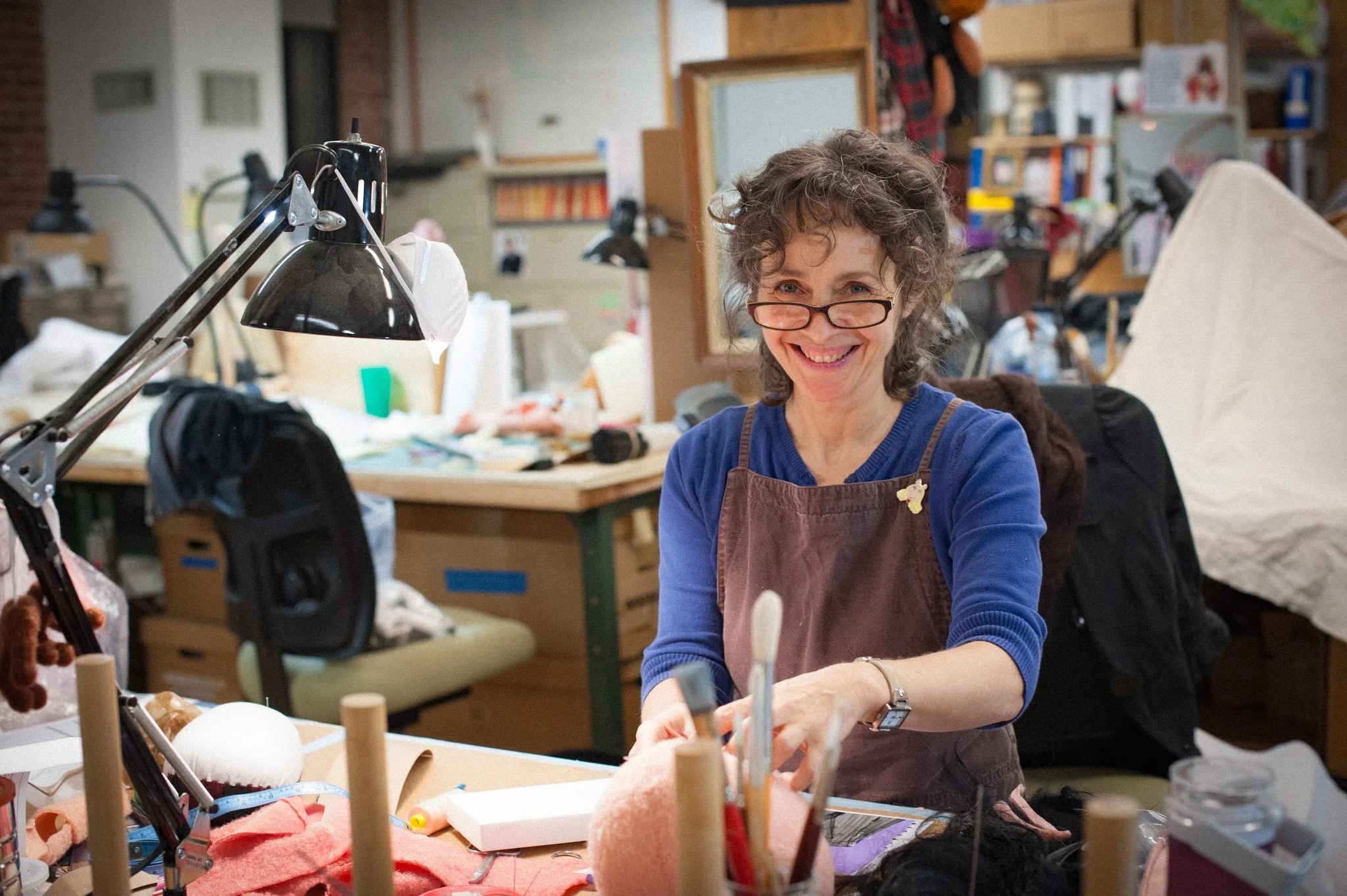
Though Isabelle initially pursued a path in Anthropology, her love for puppetry grew stronger, and she found ways to merge her academic pursuits with her craft. “During university, I had to present a folk tale. I decided to use puppets for the presentation, creating rod puppets out of papier-mâché. It was then I realized this was something I really enjoyed,” she says. From there, Isabelle began working for companies like Théâtre de la Dame de Coeur, who specialized in giant puppets. This experience helped shape her understanding of puppetry and opened the door to marionette-making.
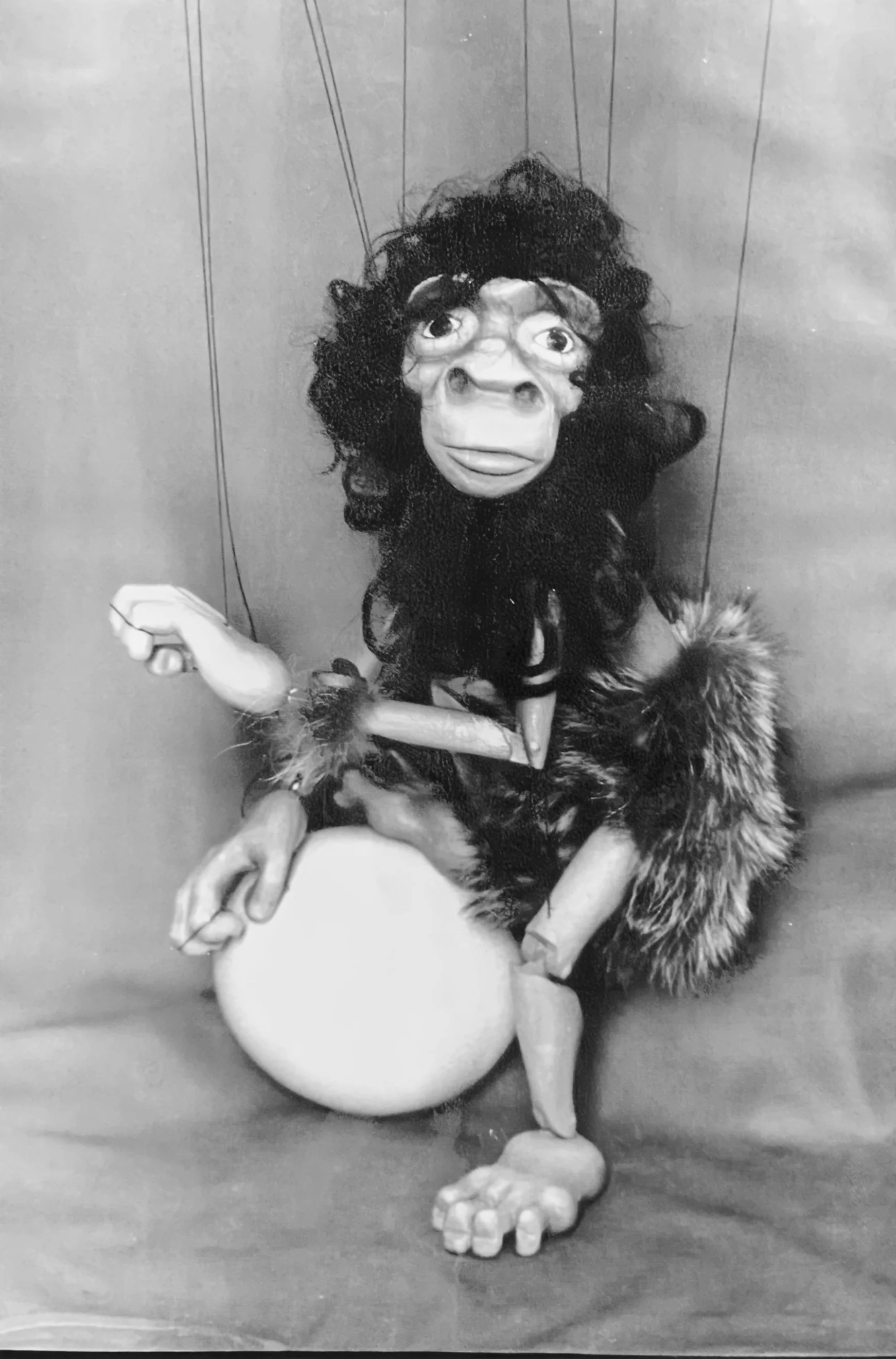
Prehistoric marionette by Isabelle DuFour performed at South Street Seaport in Lower Manhattan.
Crafting Marionettes: A Complex Process
Creating a marionette is detailed and meticulous. It requires both artistic vision and technical precision. Isabelle has honed her skills over the years. Her approach has historically been traditional craftsmanship but she has incorporated more modern techniques. She said the process begins with a drawing, where Isabelle creates both a front and side view of the puppet. “Once I have the design in place, I select the material,” she says. “I typically use linden wood because it’s soft and easy to carve. I start with a bandsaw to cut the basic shapes, then use chisels to refine the features.”
For hands, Isabelle often prefers to carve each finger individually using a scapel. “I find the surgical blade gives me more control when sculpting the fine details,” she explains.
While Isabelle is open to new technologies, she remains committed to traditional techniques. As 3D printing becomes more common in the puppetry world, Isabelle still crafts certain parts of her puppets in wood. “3D printing can be faster, but there’s something personal about working with wood,” she says. “While 3D printing can save time, there’s something unique about working directly with a material and shaping it with your own hands.”
One aspect she finds challenging is transforming a 2D drawing into a 3D puppet. She noted that when she is working with Paul he sometimes provides feedback that allows her to move forward more effectively. For example, “Sometimes a small tweak, like making the mouth slightly oval, can make a big difference in how the puppet moves,” Isabelle notes. “It’s all about making sure the puppet is flexible and easy for the puppeteer to manipulate.”
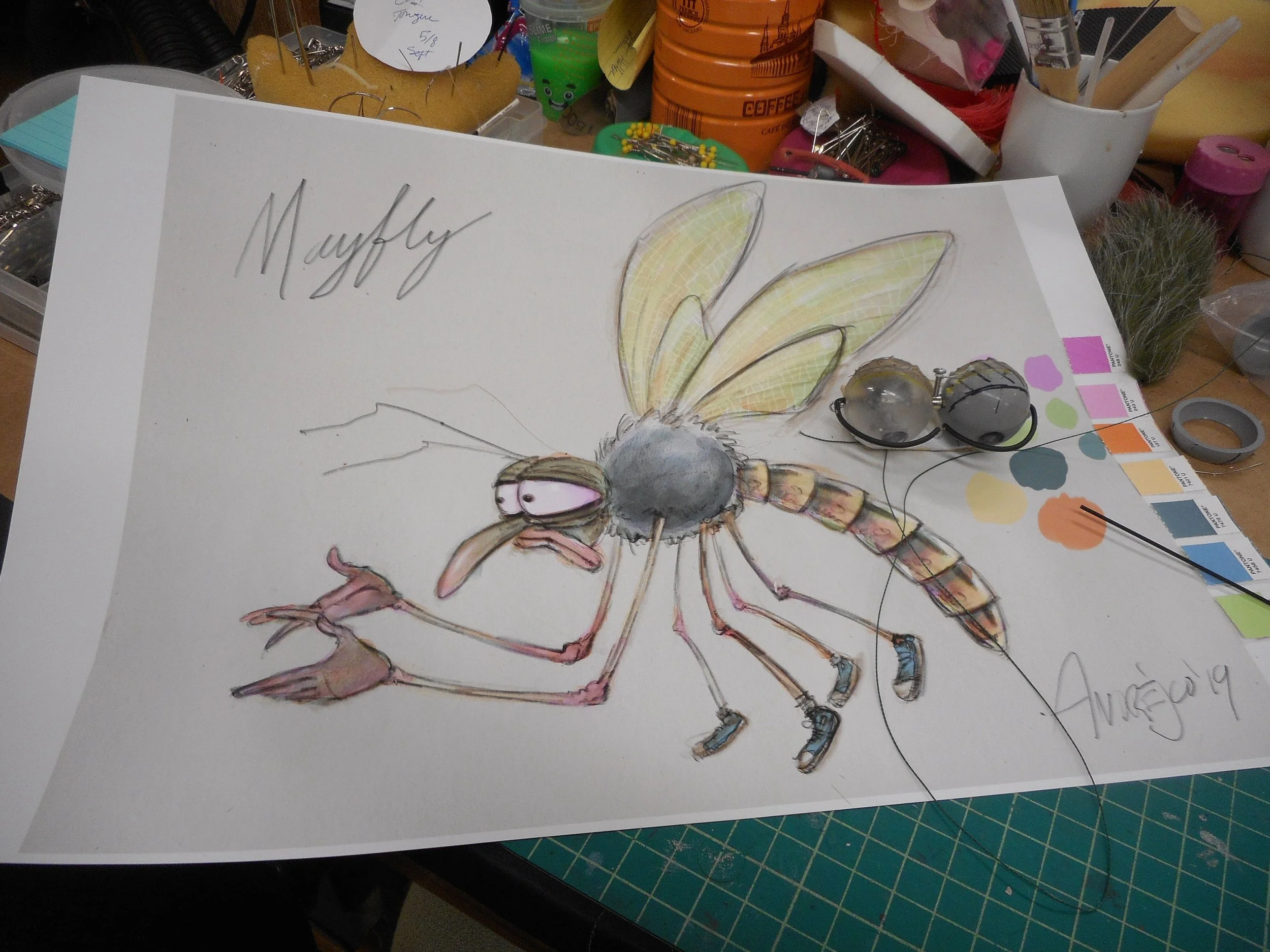
Mayfly design by Paul Andrejco with prototype eye mechanism in progress.
The Role of Storytelling
When asked what is most important in a successful puppet - is it the design, the materials, or the fabrication process - Isabelle said it is actually the script. “Your puppet can be ugly, but if the script is good, the show can succeed,” she says. For Isabelle, puppetry is not just about the puppet itself, but about how it helps convey the narrative. Whether it’s a marionette or a hand puppet, the puppet must serve the story.
This philosophy shapes her approach to marionette-making. It’s essential to understand how the puppet will be used, whether for stage or television. For stage performances, where the puppeteer is visible to the audience, you need shorter strings, but for TV, longer strings are required to keep the puppeteer hidden from view of the camera, Isabelle explains.
Crafting Iconic Characters
Throughout her career, Isabelle has had the opportunity to work on some iconic puppet designs, including her work at the Jim Henson Company, where she contributed to The Muppet Christmas Carol. She recalls meeting Paul Andrejco, a builder and designer there at the time, who later went on to found Puppet Heap. “When Paul began his own company, he called me to help build Miss Piggy,” Isabelle says. “He told me it would take three weeks to finish that job, but it’s been over 18 years now!”
“…It’s even worse for mouses!” Tiny mouse puppets designed and built by Isabelle for The Muppets Christmas Carol, 1992
Her work with Puppet Heap has allowed Isabelle to craft a variety of puppets--everything from large scale parade puppets to small mayfly marionettes, each requiring different techniques and approaches. “The fly puppet’s mechanism was complex, and I had to figure out how to make the mouth open properly, which was a challenge. But when it worked, it was incredibly rewarding,” she recalls.
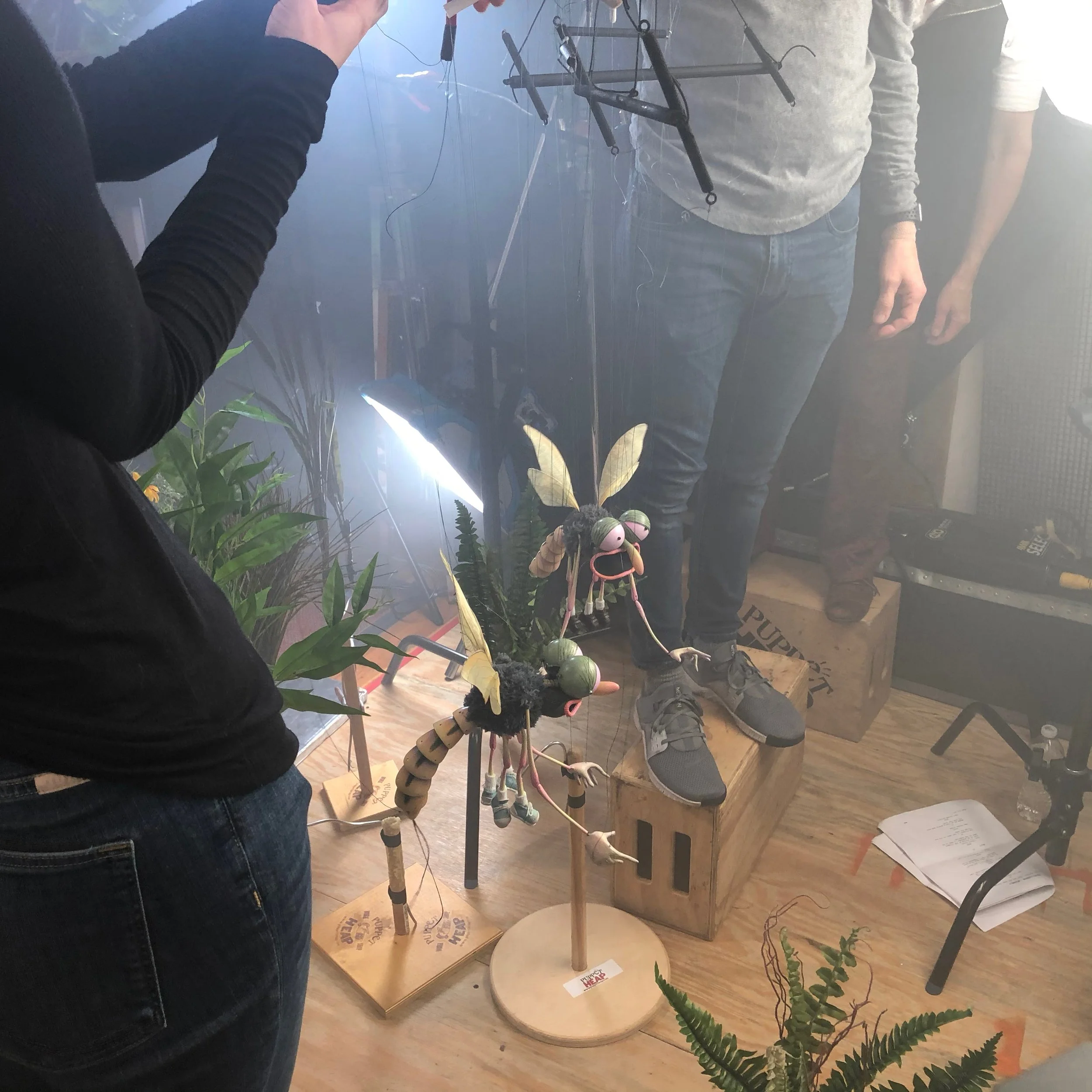
The Mayflies on set during shooting of “Limited Lifespan” at Puppet Heap’s studio.
Balancing Tradition with Innovation
As the world of puppetry evolves, Isabelle sees the benefits and drawbacks of incorporating new technologies. “People want things fast, but the problem with quick production is that the puppet often becomes harder to manipulate and less durable,” she notes. Isabelle emphasizes the importance of planning and giving time to the puppet-building process. She cautions that rushing a puppet is almost always a bad decision long term both for its functionality and quality.
The Joy of Problem-Solving
Her ability to solve complex technical problems is one of the reasons Isabelle has become such a respected figure in the puppetry world. Whether she's building a marionette for the stage or a puppet for a movie, Isabelle approaches each project with a problem-solving mindset.
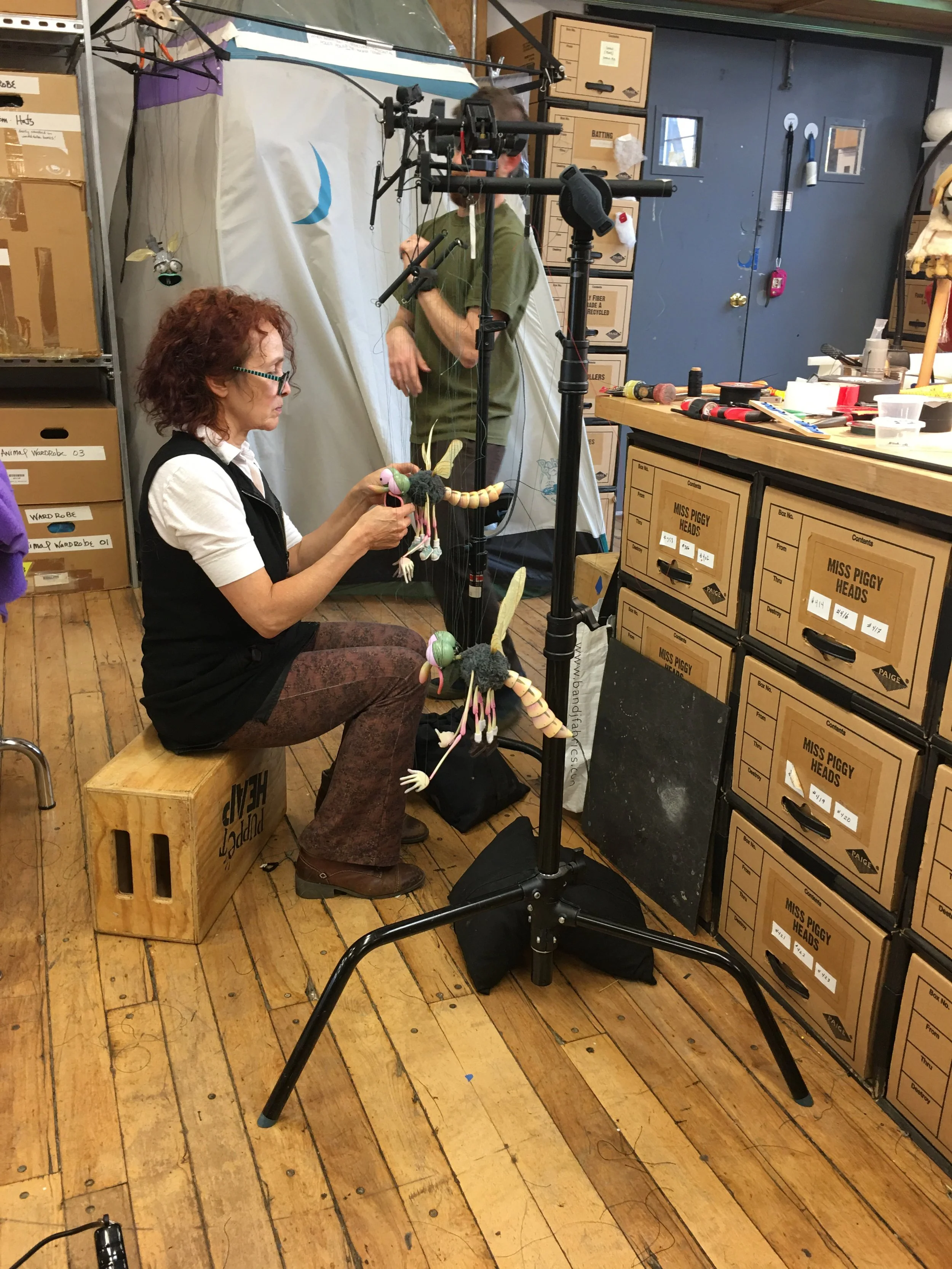
Isabelle adjusting the mayflies strings.
For Isabelle, the most rewarding aspect of marionette-making is the process of solving problems. “The work can be challenging, but the moment when everything clicks and the puppet moves the way you intended—that’s the most rewarding part,” she says. She described aha moments with her colleague, Michael Bush. After a lot of trial and error, finding a solution to a challenge is what they love most. “We’re not just puppet builders; we’re problem solvers.”
Looking Ahead: The Future of Puppetry
Though considering retirement, Isabelle remains deeply involved in puppetry. “I’m trying to do something a little more intellectual now, exploring science maths and astrophysics, but I will continue to work with Puppet Heap when they need me,” she says. As she looks to the future, Isabelle remains optimistic about the continued evolution of puppetry. “Puppetry is an art that requires dedication and creativity, and it will continue to evolve with new techniques and technologies. But the essence of the craft will always remain the same.”
For those just starting out in the field, Isabelle has some advice: “Be creative. Don’t just imitate what’s been done before. Try new things, explore different forms of puppetry, and find your own style.”
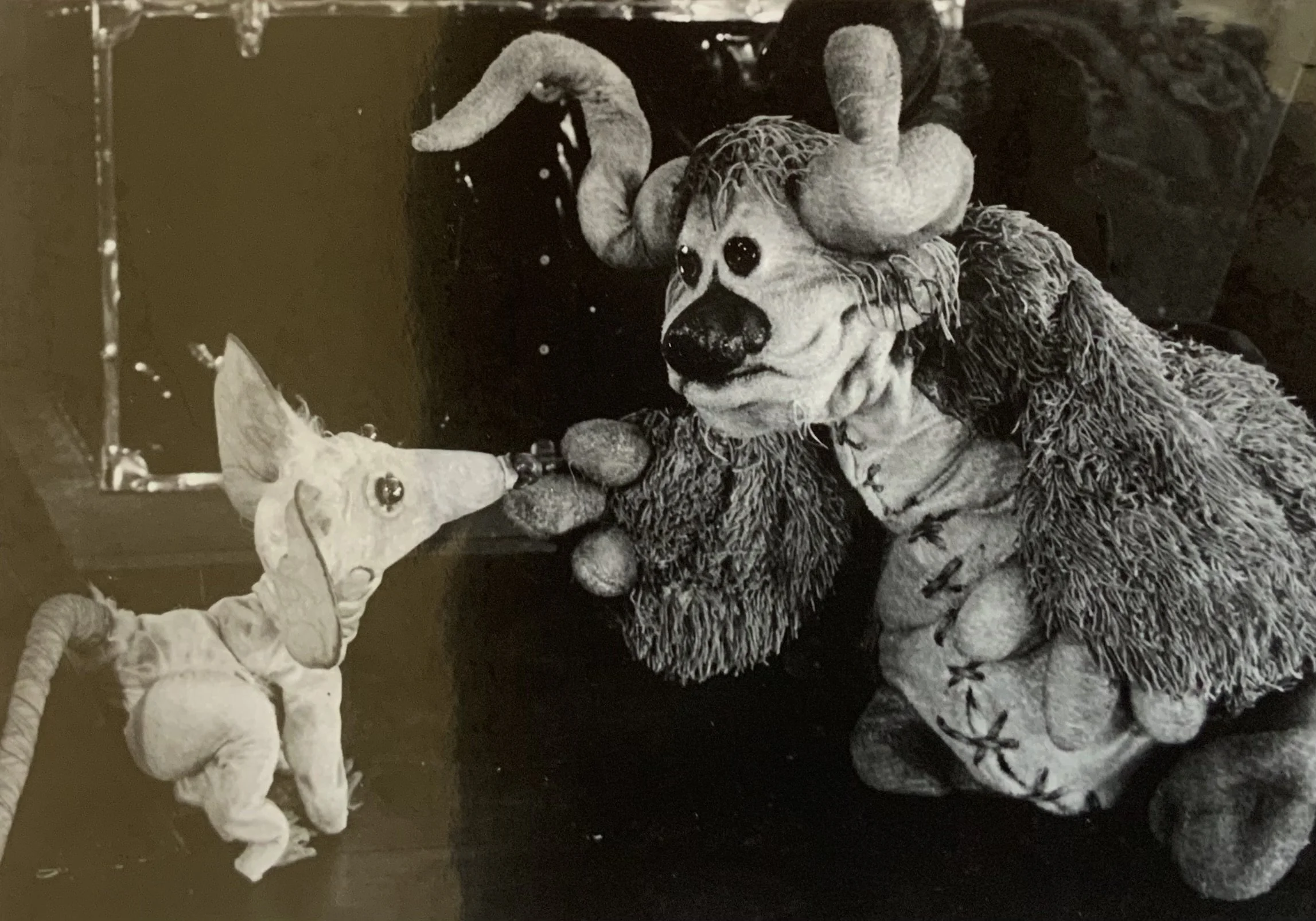
A couple of Isabelle’s puppets in Montreal with the Theatre de l’œil.
Isabelle’s passion for marionette-making and her dedication to the craft continue to inspire the next generation of puppet makers. Whether she’s solving complex technical issues or simply bringing a character to life, Isabelle’s journey through puppetry is a testament to the power of creativity and craftsmanship.
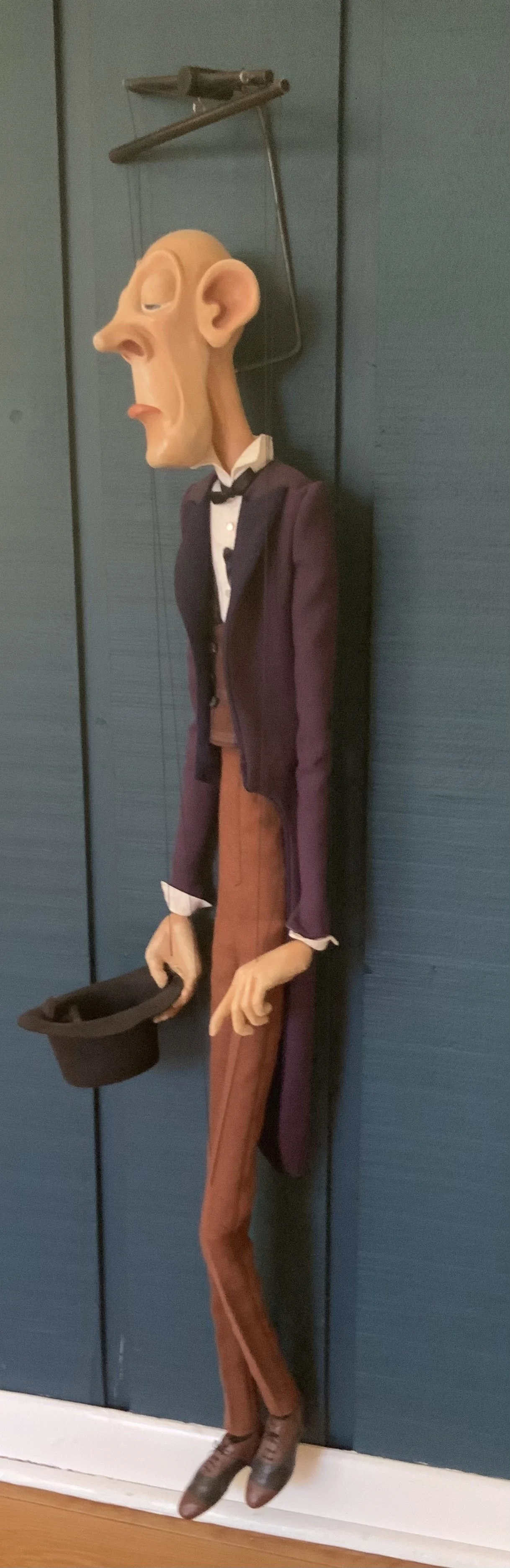
Another of Isabelle’s marionettes performed at South Street Seaport, NYC.